
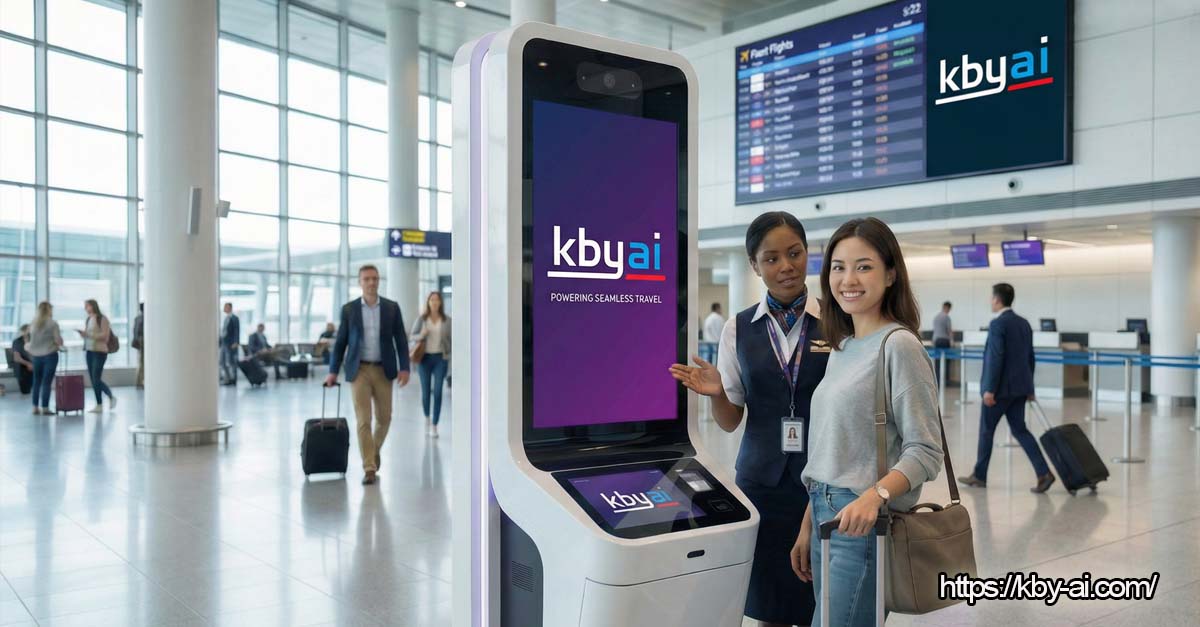
Facial scan based facial recognition boarding is transforming air travel. Learn how facial scans replace boarding passes, improve airport security, and enable faster, contactless travel worldwide.
Imagine arriving at an airport without the familiar stress of juggling boarding passes, passports, mobile phones, and travel documents. No frantic searches through bags, no fumbling at security checkpoints, and no repeated document checks at every step of the journey. Instead, you simply walk through the airport as cameras discreetly verify your identity. Your face becomes your boarding pass.
This vision is no longer futuristic speculation. It is already becoming reality at airports around the world. Facial recognition technology is rapidly transforming how passengers check in, pass through security, and board aircraft. By replacing traditional paper and digital boarding passes with biometric verification, airports and airlines are creating faster, safer, and more convenient travel experiences.
From Asia and the Middle East to Europe and North America, facial scan based facial recognition boarding systems are being deployed at scale. These systems use biometric identity verification to streamline airport operations while improving passenger satisfaction. Companies like KBY-AI play a key role in this transformation by offering advanced Face Recognition SDKs designed specifically for aviation, border control, and large-scale identity verification environments.
In this in-depth guide, we explore why facial scans are replacing boarding passes, how the technology works, real-world airport implementations, benefits and challenges, and how biometric solutions like KBY-AI are shaping the future of air travel.
The Evolution of Airport Boarding: From Paper to Facial Scans
The Traditional Boarding Experience
For decades, air travel has followed a familiar pattern. Passengers arrive at the airport with printed boarding passes or digital tickets on their phones. At multiple checkpoints—check-in counters, security screening, immigration, and boarding gates—travelers must repeatedly present documents for manual inspection.
While this system has worked for years, it has significant drawbacks:
-
Long queues at check-in and security
-
Repetitive identity verification
-
High reliance on human staff
-
Physical handling of documents
-
Increased stress for travelers
As global air travel volumes increase, these inefficiencies become more pronounced. Airports face overcrowding, airlines struggle with boarding delays, and passengers experience frustration and anxiety.
The Shift Toward Biometric Boarding
Facial scan based face recognition boarding fundamentally changes this process. Instead of repeatedly showing boarding passes and identification, travelers enroll their facial data once. After enrollment, cameras automatically verify identity at each checkpoint.
This shift transforms the passenger journey into a seamless, contactless experience. A single facial scan enables check-in, security clearance, and boarding, significantly reducing friction and wait times.
Traditional Boarding vs. Facial Recognition Boarding
To better understand the impact of this transformation, let’s compare the traditional boarding process with the facial scan experience.
Traditional Boarding Experience
-
Passengers present paper or digital boarding passes multiple times
-
Manual verification by staff at each checkpoint
-
Longer queues and boarding delays
-
Physical contact with documents and scanners
-
Higher risk of lost or damaged boarding passes
Facial Scan Boarding Experience
-
One-time biometric enrollment
-
Automated identity verification via facial recognition
-
Faster check-in and boarding
-
Reduced queues and congestion
-
Fully contactless travel experience
With biometric systems in place, a passenger’s face effectively becomes their boarding pass. This approach improves efficiency for airlines while delivering a smoother journey for travelers.
How Facial Recognition Technology Works in Airports
Capturing and Verifying Identity
Facial recognition systems work by capturing a live image of a traveler’s face and comparing it with stored biometric data. The process involves several steps:
-
Enrollment
The traveler’s facial image is captured during check-in, mobile app registration, or border control. -
Template Creation
The system extracts unique facial features and converts them into a mathematical representation, known as a biometric template. -
Live Verification
Cameras at checkpoints capture a live facial image and compare it with the stored template. -
Identity Match
If the system confirms a match, the traveler is automatically cleared to proceed.
Advanced solutions like KBY-AI’s Face Recognition SDK use high-accuracy algorithms to ensure reliable identity verification even in challenging airport environments.
Security and Anti-Fraud Measures
Liveness Detection
One of the most critical aspects of airport facial recognition is security. Modern biometric systems include liveness detection to prevent spoofing attempts using photos, videos, or masks.
Liveness detection ensures that the face being scanned belongs to a real, physically present person. This significantly reduces the risk of identity fraud.
FRVT-Tested Accuracy
High-quality facial scan systems undergo rigorous evaluation. Technologies used in airports are often tested under NIST FRVT (Face Recognition Vendor Test) programs, which assess accuracy, speed, and reliability.
KBY-AI’s facial scan solutions are built to meet enterprise-level performance standards, ensuring accurate 1:1 identity verification for secure airport operations.
Real-World Implementations of Facial Recognition Boarding
Facial scan based facial recognition boarding is no longer experimental. Many airports and airlines have already deployed biometric systems with measurable success.
Digi Yatra – India
India’s Digi Yatra program enables passengers to use facial recognition across multiple airports. With a single facial scan, travelers can complete:
-
Airport check-in
-
Security screening
-
Boarding gate verification
This program significantly reduces waiting times while eliminating the need for paper boarding passes.
United States – CBP and Traveler Verification Service
In the United States, Customs and Border Protection (CBP) operates the Traveler Verification Service (TVS). This system allows passengers at major airports to move through boarding gates using facial recognition instead of traditional tickets.
Airlines benefit from faster boarding times, while passengers enjoy a streamlined airport experience.
Star Alliance Biometric Platform – Europe
Star Alliance has introduced a shared biometric platform across multiple European airports. Passengers enrolled in the system can travel through different airports using a single facial identity.
This cross-airport interoperability supports truly seamless international travel and aligns with global digital identity initiatives.
Smart Airports in Dubai and Abu Dhabi
Dubai International Airport and Abu Dhabi Airports have implemented advanced facial recognition systems for millions of passengers annually.
These smart airport initiatives integrate airport security facial recognition, digital boarding, and biometric immigration control, offering one of the most advanced passenger experiences in the world.
Passenger Experience Example
A traveler passing through Singapore’s Changi Airport described how facial recognition allowed them to move directly from check-in to the lounge without stopping at manual checkpoints. The result was a calmer, faster, and more enjoyable airport experience.
These deployments align closely with the IATA One ID initiative, which promotes a single digital identity for air travel worldwide.
Benefits of Facial Recognition Boarding for Travelers
Facial recognition boarding offers numerous advantages for passengers, making it an increasingly popular choice.
Faster Airport Journeys
Automated biometric verification significantly reduces waiting times at check-in, security, and boarding gates. Flights can board faster, and passengers spend less time standing in queues.
Enhanced Airport Security
Biometric identity verification is more secure than traditional boarding passes, which can be lost, stolen, or forged. Facial recognition ensures that only verified individuals access restricted areas.
Reduced Travel Stress
Passengers no longer need to worry about misplacing boarding passes or unlocking phones at every checkpoint. Their face is always with them.
Contactless and Hygienic Travel
In a post-pandemic world, contactless solutions are more important than ever. Facial recognition minimizes physical contact with surfaces and staff, supporting safer travel.
Accessibility and Convenience
Facial recognition can improve accessibility for elderly travelers, families with children, and people with disabilities by reducing manual steps in the travel process.
Challenges and Considerations for Travelers
Despite its benefits, facial recognition boarding also raises important considerations.
Privacy and Data Protection
Some travelers are concerned about how their biometric data is stored and used. Responsible providers follow strict data protection regulations and ensure transparency.
Companies like KBY-AI design their systems to comply with global privacy frameworks and allow airports to implement consent-based enrollment models.
Optional Participation
In most airports, facial recognition boarding is optional. Passengers can choose to use traditional boarding passes if they prefer.
This hybrid approach helps build trust while allowing gradual adoption of biometric technology.
Technical Limitations
Factors such as lighting conditions, facial accessories, or system downtime can occasionally affect performance. However, modern systems are designed to handle these challenges with high reliability.
How KBY-AI Supports Airports and Airlines
KBY-AI provides a robust Face Recognition SDK tailored for aviation and large-scale identity verification use cases.
Key Capabilities
-
High-accuracy facial recognition algorithms
-
Real-time biometric identity verification
-
Liveness detection and anti-spoofing
-
Scalable integration for airports and airlines
-
Compliance with security and privacy standards
End-to-End Biometric Solutions
KBY-AI supports airports and airlines throughout the implementation journey, including:
-
System integration
-
Staff training
-
Passenger onboarding
-
Ongoing technical support
By leveraging KBY-AI’s facial recognition technology, airports can modernize their infrastructure and deliver a next-generation passenger experience.
The Future of Air Travel With Facial Recognition
Facial recognition boarding represents a major shift in how people travel by air. As adoption grows, the passenger journey will become increasingly seamless, secure, and personalized.
Future developments may include:
-
Fully biometric international travel
-
Cross-border digital identity systems
-
Personalized airport services based on biometric verification
-
Reduced reliance on physical documents
As airports continue to modernize, biometric identity verification will play a central role in shaping the future of aviation.
Conclusion
Facial scans are rapidly replacing traditional boarding passes because they offer a better way to travel. Faster check-in, stronger security, reduced stress, and contactless convenience make biometric boarding an ideal solution for modern airports.
With advanced solutions like KBY-AI’s Face Recognition SDK, airports and airlines can implement secure, scalable, and privacy-conscious biometric systems that benefit both operators and travelers.
In the near future, the only ticket passengers may need is their face.
Frequently Asked Questions (FAQ)
1. Can facial scans completely replace boarding passes?
Yes, facial recognition boarding enables airports to eliminate traditional boarding passes for enrolled passengers.
2. Is facial scan safe for airport travel?
Yes. Modern facial recognition systems use secure biometric identity verification and liveness detection to prevent fraud.
3. Do all airports use facial scan boarding?
No. Adoption varies by region, but many airports now offer optional biometric boarding programs.
4. What happens if facial scan fails?
Passengers can use a traditional boarding pass or re-enroll in the system if needed.
5. Do passengers have to opt in?
Most airports require passengers to voluntarily opt in for facial recognition boarding programs.